



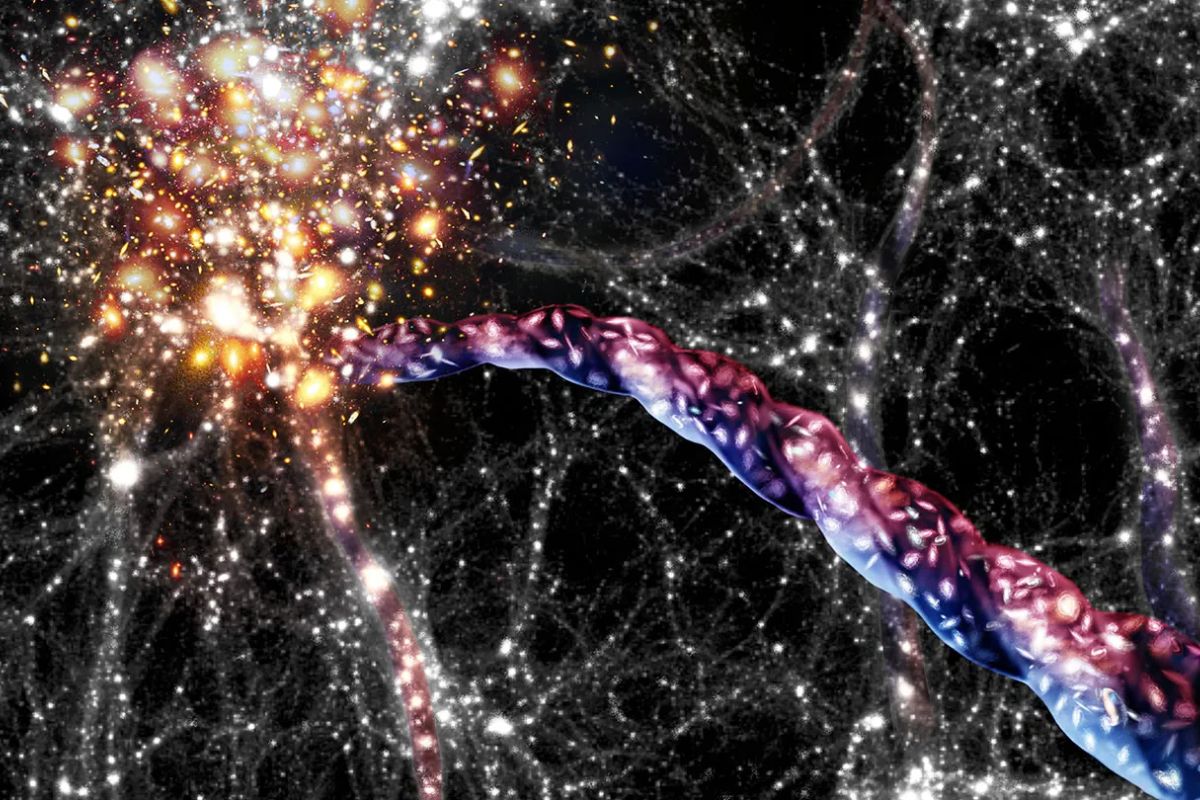
What is a spinning cosmic filament structure? Imagine the universe as a giant web, with galaxies and stars forming the threads. A spinning cosmic filament structure is one of these threads, but with a twist—literally! These filaments are vast, rotating strands of galaxies and dark matter, stretching millions of light-years across space. They play a crucial role in the large-scale structure of the universe, acting as cosmic highways for galaxies. Scientists believe that understanding these spinning filaments can provide insights into how galaxies form and evolve. Buckle up as we unravel 25 mind-blowing facts about these cosmic marvels!
What is a Spinning Cosmic Filament?
Spinning cosmic filaments are gigantic structures in the universe, connecting galaxies like threads in a cosmic web. These filaments are not just static; they spin, creating a fascinating dynamic in the cosmos.
-
Cosmic filaments are vast structures: They can stretch over hundreds of millions of light-years, connecting clusters of galaxies.
-
They are part of the cosmic web: The universe is structured like a web, with filaments acting as the threads connecting galaxy clusters.
-
Filaments contain dark matter: Most of the mass in these filaments is dark matter, an invisible substance that makes up about 27% of the universe.
-
They influence galaxy formation: The gravitational pull of these filaments helps in the formation and evolution of galaxies.
How Do We Observe Spinning Cosmic Filaments?
Observing these massive structures requires advanced technology and techniques. Scientists use various methods to study their properties and behaviors.
-
Radio telescopes are crucial: These telescopes can detect the faint signals from hydrogen gas within the filaments.
-
Gravitational lensing helps: The bending of light by gravity allows astronomers to map the distribution of dark matter in filaments.
-
Computer simulations are used: Simulations help scientists understand the formation and evolution of these structures over billions of years.
-
Spectroscopy reveals details: By analyzing the light from galaxies within filaments, scientists can determine their composition and motion.
Why Do Cosmic Filaments Spin?
The spinning of cosmic filaments is a relatively new discovery, and scientists are still trying to understand the mechanisms behind it.
-
Angular momentum plays a role: As matter collapses to form filaments, it can acquire angular momentum, causing it to spin.
-
Galaxy interactions contribute: The gravitational interactions between galaxies within the filaments can induce rotational motion.
-
Dark matter dynamics: The behavior of dark matter within filaments can influence their spin.
-
Cosmic vorticity: The large-scale rotation of the universe might also contribute to the spinning of these structures.
What Are the Implications of Spinning Cosmic Filaments?
Understanding the spin of cosmic filaments can provide insights into the fundamental workings of the universe.
-
Galaxy rotation insights: Studying filament spin can help explain why galaxies rotate the way they do.
-
Dark matter properties: The spin of filaments can offer clues about the nature and behavior of dark matter.
-
Cosmic evolution: The dynamics of filaments can shed light on the overall evolution of the universe.
-
Gravitational waves: Spinning filaments might produce gravitational waves, ripples in spacetime that can be detected by observatories.
Interesting Facts About Cosmic Filaments
These structures are not only scientifically significant but also incredibly fascinating.
-
Largest structures in the universe: Cosmic filaments are the largest known structures in the cosmos.
-
They are interconnected: Filaments form a vast, interconnected network that spans the entire universe.
-
Home to many galaxies: Each filament can contain thousands of galaxies, all bound together by gravity.
-
They are dynamic: Filaments are not static; they evolve and change over time.
-
Influence on cosmic microwave background: The presence of filaments can affect the cosmic microwave background radiation, the afterglow of the Big Bang.
-
Temperature variations: Filaments can have temperature variations, with some regions being hotter due to the presence of active galaxies.
-
Magnetic fields: These structures can host magnetic fields, which influence the motion of charged particles within them.
-
Gas flows: Filaments can channel gas flows, feeding galaxies and influencing star formation.
-
Potential for new discoveries: As technology advances, scientists expect to uncover even more about these mysterious cosmic structures.
The Cosmic Filament's Mysteries
The spinning cosmic filament structure is a mind-blowing part of our universe. These massive threads of galaxies and dark matter stretch across the cosmos, connecting everything like a giant web. Their rotation is a recent discovery, adding a new layer to our understanding of the universe's dynamics. Scientists are still figuring out what drives this spin, but it could change how we think about galaxy formation and the universe's evolution.
These filaments aren't just static structures; they're dynamic and full of surprises. They play a crucial role in shaping galaxies and distributing matter. As research continues, we might uncover even more astonishing facts about these cosmic giants. So, next time you gaze at the stars, remember there's a whole web of spinning filaments out there, holding the universe together in ways we’re just beginning to understand.
Was this page helpful?
Our commitment to delivering trustworthy and engaging content is at the heart of what we do. Each fact on our site is contributed by real users like you, bringing a wealth of diverse insights and information. To ensure the highest standards of accuracy and reliability, our dedicated editors meticulously review each submission. This process guarantees that the facts we share are not only fascinating but also credible. Trust in our commitment to quality and authenticity as you explore and learn with us.