



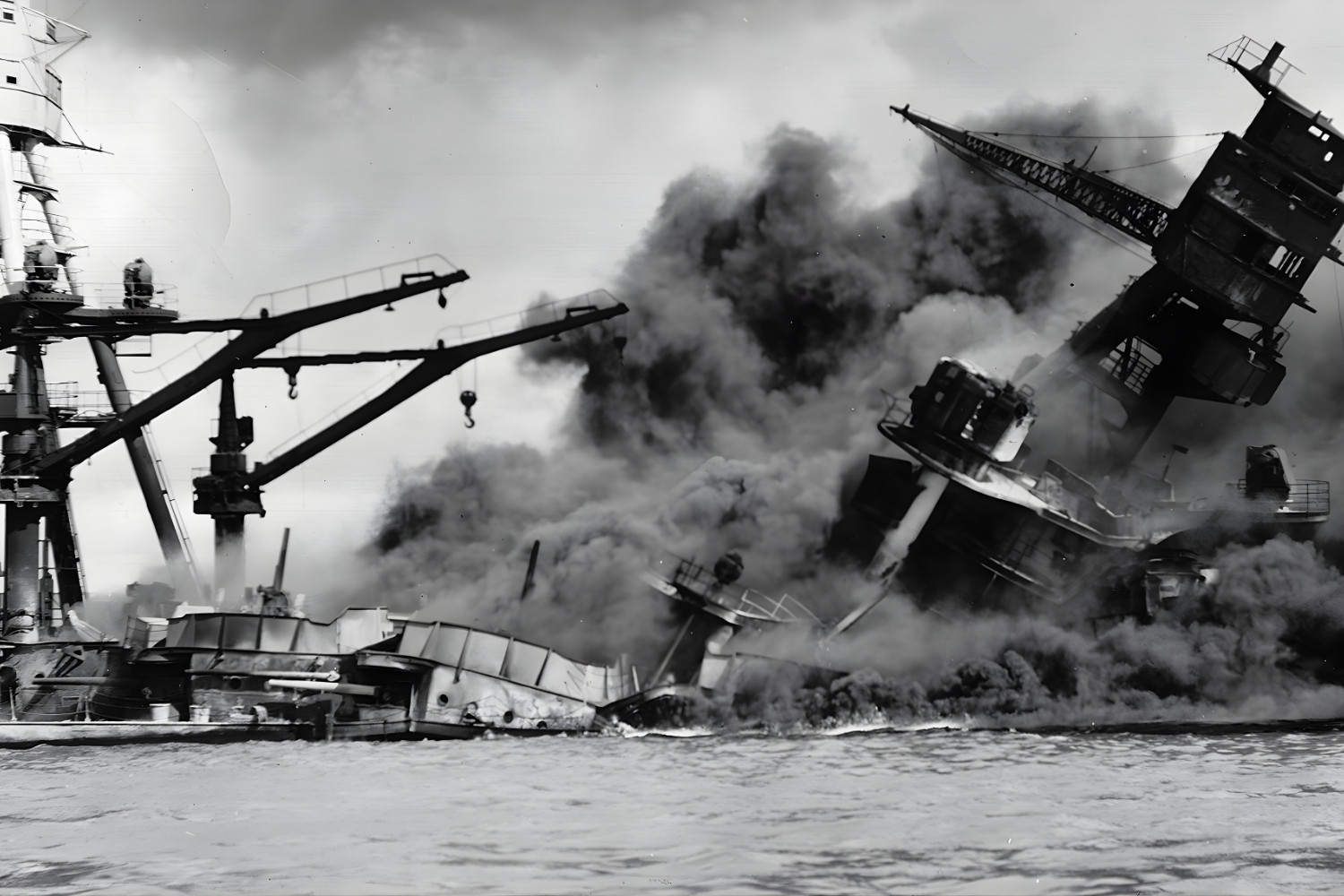
December 7, 1941 is a date that resonates deeply in history. On this day, the Japanese launched a surprise attack on Pearl Harbor, a U.S. naval base in Hawaii. This event catapulted the United States into World War II. But beyond the well-known facts, there are numerous intriguing details about this pivotal moment. Did you know that the attack lasted just 110 minutes? Or that it led to the sinking of four battleships? This post will delve into 30 fascinating facts about December 7, 1941, shedding light on the lesser-known aspects of this historic day. Get ready to uncover some surprising truths!
The Attack on Pearl Harbor
December 7, 1941, is a date that lives in infamy. This day marked a pivotal moment in world history, particularly for the United States and Japan. Here are some compelling facts about that fateful day.
-
The attack on Pearl Harbor was a surprise military strike by the Imperial Japanese Navy Air Service against the United States naval base at Pearl Harbor, Hawaii.
-
The attack occurred on a Sunday morning, catching many off guard as they were either sleeping or attending church services.
-
The Japanese launched the attack in two waves, with the first wave hitting its targets at 7:48 a.m. Hawaiian Time.
The Human Toll
The human cost of the attack was devastating. Many lives were lost, and countless others were forever changed.
-
A total of 2,403 Americans were killed during the attack, including 68 civilians.
-
Another 1,178 people were wounded, many of whom suffered severe burns and other injuries.
-
The USS Arizona suffered the most casualties, with 1,177 crewmen losing their lives when the ship exploded and sank.
The Military Impact
The attack had a significant impact on the U.S. military, both in terms of immediate losses and long-term consequences.
-
Eight U.S. Navy battleships were damaged, with four being sunk.
-
All but two of the battleships were later raised and returned to service, a testament to the resilience and determination of the U.S. Navy.
-
The Japanese also targeted airfields, destroying 188 U.S. aircraft and damaging many more.
The Japanese Strategy
Understanding the Japanese strategy helps explain why the attack was so effective and why it had such a profound impact.
-
The Japanese aimed to cripple the U.S. Pacific Fleet to prevent interference with their plans to expand throughout Southeast Asia.
-
The attack was meticulously planned, with Japanese spies gathering intelligence on Pearl Harbor for months beforehand.
-
The Japanese fleet traveled over 3,000 miles across the Pacific Ocean to reach their target, maintaining radio silence to avoid detection.
The Aftermath
The immediate aftermath of the attack saw a flurry of activity as the U.S. responded to this unprecedented act of aggression.
-
President Franklin D. Roosevelt addressed Congress the following day, famously declaring December 7, 1941, "a date which will live in infamy."
-
Congress declared war on Japan on December 8, 1941, marking the United States' entry into World War II.
-
Germany and Italy declared war on the United States on December 11, 1941, bringing the U.S. into the European theater of the war as well.
The Long-Term Consequences
The attack on Pearl Harbor had far-reaching consequences that shaped the course of World War II and the post-war world.
-
The attack galvanized American public opinion, uniting the country in support of the war effort.
-
The U.S. ramped up its industrial production, becoming the "Arsenal of Democracy" that supplied the Allies with much-needed war materials.
-
The attack led to the internment of Japanese Americans, a dark chapter in U.S. history marked by prejudice and fear.
The Legacy
The legacy of Pearl Harbor continues to be felt today, both in terms of historical memory and ongoing commemorations.
-
Pearl Harbor is now a National Historic Landmark, with memorials dedicated to those who lost their lives.
-
The USS Arizona Memorial, built over the remains of the sunken battleship, attracts millions of visitors each year.
-
December 7 is commemorated annually as National Pearl Harbor Remembrance Day in the United States.
Lesser-Known Facts
While many aspects of the attack on Pearl Harbor are well-known, some lesser-known facts add depth to our understanding of this historic event.
-
The Japanese used midget submarines in the attack, although they were largely ineffective.
-
The attack lasted only 90 minutes but caused immense destruction and loss of life.
-
The Japanese lost 29 aircraft and five midget submarines during the attack.
Personal Stories
Personal stories from that day provide a human perspective on the events and their impact.
-
Doris "Dorie" Miller, an African American cook on the USS West Virginia, became a hero for his actions during the attack, earning the Navy Cross.
-
Many survivors of the attack went on to serve with distinction throughout the war, driven by a desire for justice and revenge.
-
Families of those who perished on the USS Arizona can have their ashes interred within the ship, a unique and poignant memorial.
The Global Context
The attack on Pearl Harbor didn't happen in isolation; it was part of a broader global conflict.
-
The attack was part of Japan's broader strategy to dominate the Asia-Pacific region and secure vital resources.
-
The attack led to a series of rapid Japanese victories in the Pacific, including the capture of the Philippines, Guam, and Wake Island.
-
The U.S. response to the attack included the Doolittle Raid, a daring bombing raid on Tokyo that boosted American morale and demonstrated Japan's vulnerability.
Reflecting on December 7, 1941
December 7, 1941, changed the course of history. The attack on Pearl Harbor wasn't just a military strike; it was a pivotal moment that thrust the United States into World War II. This day is a reminder of the bravery and sacrifice of countless individuals. It also underscores the importance of vigilance and preparedness in the face of unexpected challenges.
Understanding the events of that day helps us appreciate the resilience and unity that emerged in its aftermath. It’s a testament to the strength of a nation and the enduring spirit of its people. As we remember December 7, let’s honor those who served and reflect on the lessons learned. History, after all, isn't just about the past; it shapes our present and guides our future.
Was this page helpful?
Our commitment to delivering trustworthy and engaging content is at the heart of what we do. Each fact on our site is contributed by real users like you, bringing a wealth of diverse insights and information. To ensure the highest standards of accuracy and reliability, our dedicated editors meticulously review each submission. This process guarantees that the facts we share are not only fascinating but also credible. Trust in our commitment to quality and authenticity as you explore and learn with us.