



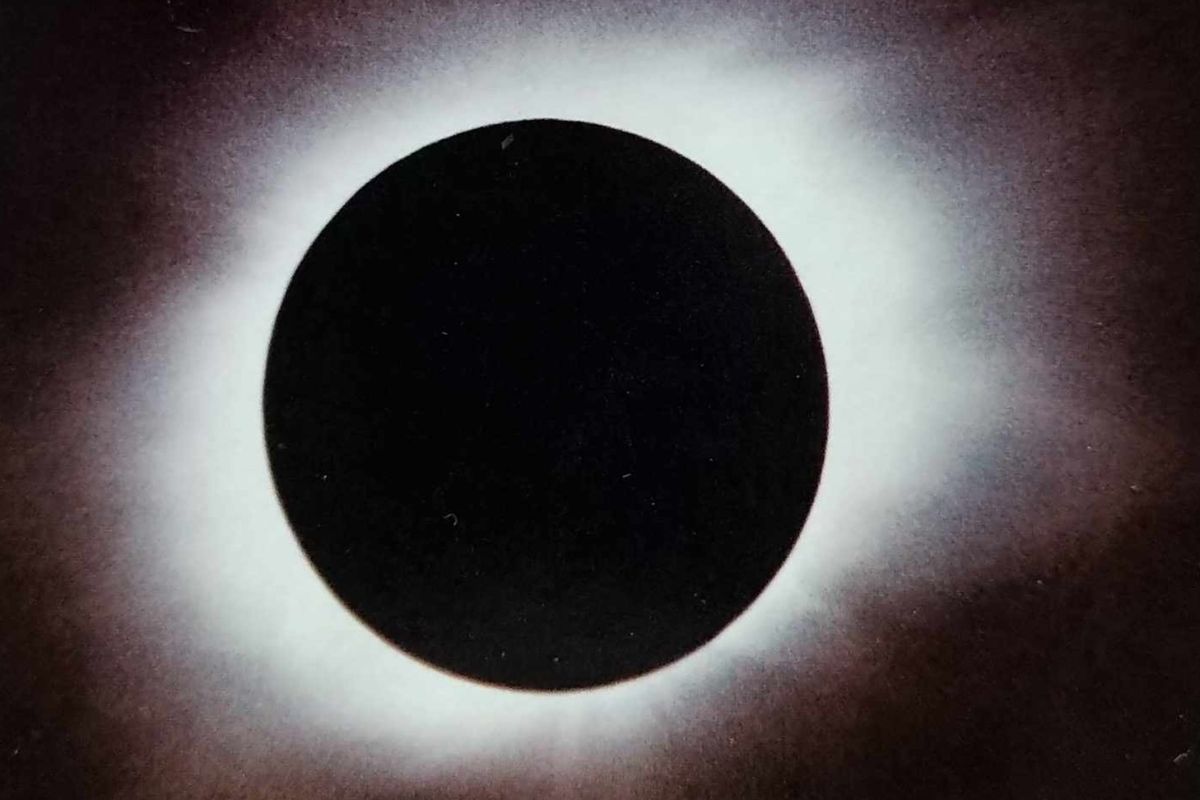
What is the longest solar eclipse ever recorded? The longest solar eclipse lasted 7 minutes and 32 seconds. This extraordinary event occurred on June 15, 743 BC. Solar eclipses happen when the moon passes between Earth and the sun, casting a shadow on Earth. These events can be total, partial, or annular, depending on the alignment. The longest ones are rare, making them fascinating for scientists and skywatchers alike. Understanding these celestial events helps us learn more about the movements of our solar system. Ready to dive into more intriguing facts about the longest solar eclipse? Let's get started!
The Longest Solar Eclipse: An Overview
Solar eclipses have fascinated humans for centuries. The longest solar eclipse, in particular, holds a special place in astronomical history. Here are some intriguing facts about this celestial event.
-
The longest solar eclipse lasted 7 minutes and 29 seconds. This occurred on June 20, 1955.
-
Solar eclipses happen when the moon passes between Earth and the sun, blocking the sun's light.
-
The longest solar eclipse of the 21st century occurred on July 22, 2009. It lasted 6 minutes and 39 seconds.
-
Total solar eclipses are rare because the moon's orbit is tilted relative to Earth's orbit around the sun.
Historical Significance
Eclipses have not only scientific importance but also historical and cultural significance.
-
Ancient Chinese astronomers could predict solar eclipses as early as 2134 BCE.
-
In ancient Greece, Thales of Miletus predicted a solar eclipse in 585 BCE, which stopped a battle between the Lydians and the Medes.
-
The ancient Babylonians kept detailed records of solar eclipses, which helped them develop early astronomical theories.
-
Some cultures viewed solar eclipses as omens, often associated with significant events or changes.
Scientific Discoveries
Solar eclipses have contributed to many scientific discoveries and advancements.
-
During the 1919 solar eclipse, Sir Arthur Eddington confirmed Einstein's theory of general relativity by observing the bending of starlight.
-
Eclipses help scientists study the sun's corona, the outermost part of its atmosphere.
-
Solar eclipses provide opportunities to study the moon's surface and its interaction with solar radiation.
-
Eclipses have helped refine our understanding of the sun's structure and behavior.
Viewing and Safety
Watching a solar eclipse can be a breathtaking experience, but safety is paramount.
-
Never look directly at a solar eclipse without proper eye protection, as it can cause permanent eye damage.
-
Eclipse glasses and solar viewers are specially designed to protect your eyes while viewing an eclipse.
-
Pinhole projectors and solar filters for telescopes are safe ways to observe an eclipse indirectly.
-
Some people travel great distances to be in the path of totality, where the eclipse is most visible.
Cultural Impact
Solar eclipses have left a mark on various cultures around the world.
-
In Hindu mythology, a solar eclipse is caused by the demon Rahu swallowing the sun.
-
The ancient Egyptians believed that a solar eclipse was a battle between the sun god Ra and the serpent Apep.
-
The Navajo people view solar eclipses as a time for reflection and staying indoors.
-
In Japan, solar eclipses were once thought to be caused by celestial foxes trying to steal the sun.
Modern-Day Eclipses
Even today, solar eclipses continue to captivate and inspire.
-
The next longest solar eclipse will occur on July 16, 2186, lasting 7 minutes and 29 seconds.
-
Solar eclipses are often broadcast live, allowing people worldwide to witness the event.
-
Eclipses inspire art, literature, and music, reflecting their impact on human creativity.
-
Scientists use modern technology to predict eclipses with incredible accuracy, sometimes years in advance.
-
Solar eclipses remind us of our place in the universe, sparking curiosity and wonder about the cosmos.
Final Glimpse at the Longest Solar Eclipse
The longest solar eclipse, lasting over 7 minutes, remains a marvel of nature. This rare event, occurring every 18 years, captivates skywatchers worldwide. Ancient cultures viewed eclipses with awe and fear, often attributing them to mythical creatures or divine intervention. Modern science, however, has demystified these celestial events, allowing us to predict and understand them with precision.
Witnessing a solar eclipse requires proper eye protection to avoid serious damage. The next opportunity to see such a long eclipse won't come until 2186, making it a once-in-a-lifetime experience for most. Whether you're an astronomy enthusiast or just curious, the longest solar eclipse offers a unique chance to connect with the cosmos.
So, mark your calendars, grab your eclipse glasses, and get ready to be amazed by one of nature's most spectacular shows.
Was this page helpful?
Our commitment to delivering trustworthy and engaging content is at the heart of what we do. Each fact on our site is contributed by real users like you, bringing a wealth of diverse insights and information. To ensure the highest standards of accuracy and reliability, our dedicated editors meticulously review each submission. This process guarantees that the facts we share are not only fascinating but also credible. Trust in our commitment to quality and authenticity as you explore and learn with us.