



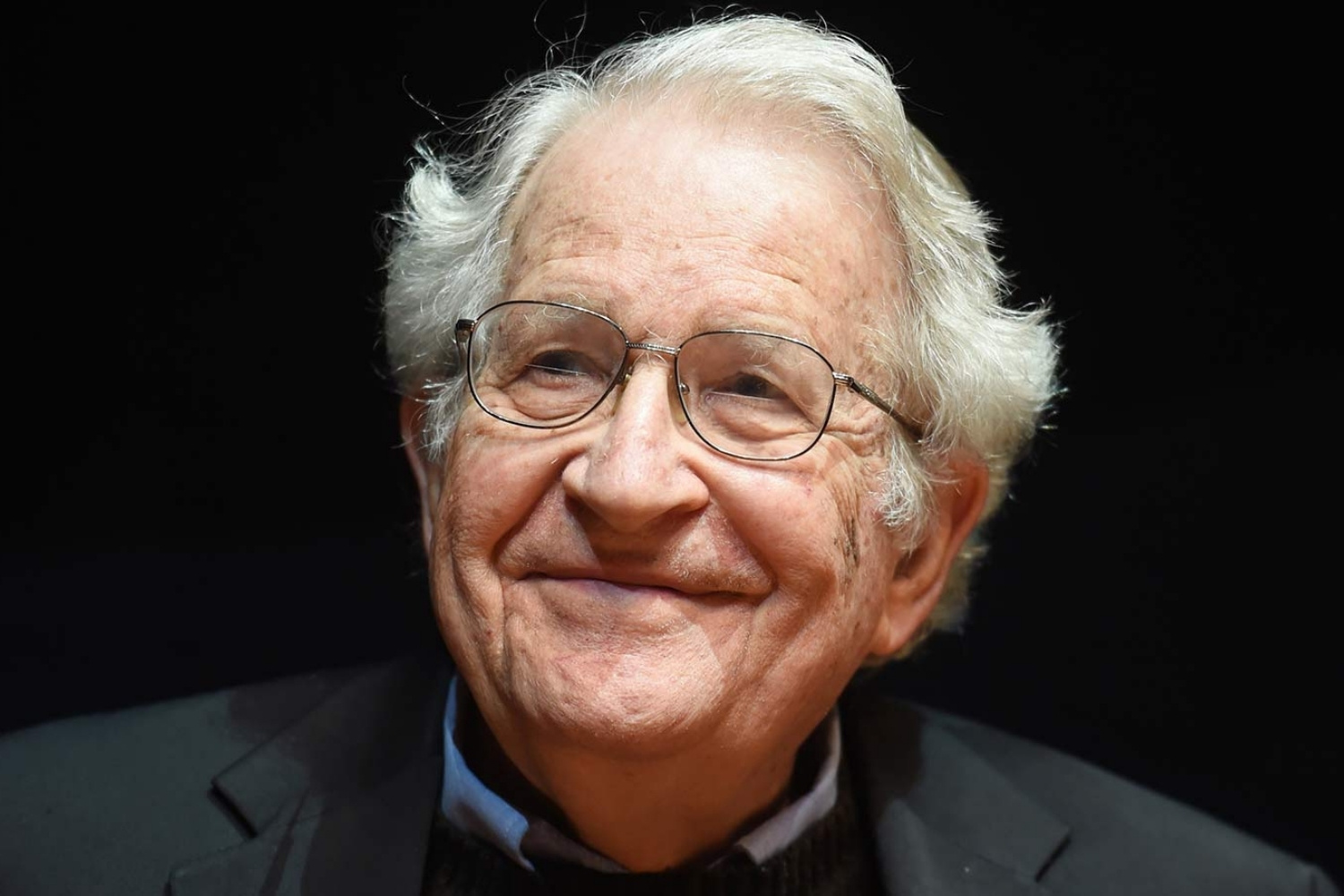
Who is Noam Chomsky? Noam Chomsky is a renowned linguist, philosopher, cognitive scientist, historian, social critic, and political activist. Born on December 7, 1928, in Philadelphia, Pennsylvania, he has made groundbreaking contributions to the field of linguistics, particularly through his theory of generative grammar. Chomsky's work extends beyond linguistics; he is also a vocal critic of U.S. foreign policy and mainstream media. His books and lectures have inspired countless individuals to question authority and think critically about societal structures. With a career spanning over seven decades, Chomsky remains a pivotal figure in both academic and public discourse.
Early Life and Education
Noam Chomsky's journey began in a unique setting that shaped his future contributions to linguistics, philosophy, and cognitive science.
- Born on December 7, 1928, in Philadelphia, Pennsylvania, Chomsky grew up in a Jewish family with strong intellectual traditions.
- His father, William Chomsky, was a Hebrew scholar, which influenced Noam's early interest in language and education.
- At age 16, Chomsky enrolled at the University of Pennsylvania, where he studied linguistics, mathematics, and philosophy.
- He completed his Ph.D. in linguistics in 1955, with a dissertation titled "Transformational Analysis."
Contributions to Linguistics
Chomsky revolutionized the field of linguistics with groundbreaking theories and concepts.
- In 1957, he published "Syntactic Structures," a book that introduced transformational grammar and changed the study of language.
- Chomsky proposed the idea of a "universal grammar," suggesting that the ability to learn language is innate to humans.
- His theory of generative grammar posits that a set of rules can generate all possible sentences in a language.
- Chomsky's work challenged the behaviorist view of language acquisition, which dominated psychology at the time.
Political Activism
Beyond academia, Chomsky is known for his outspoken political views and activism.
- He has been a vocal critic of U.S. foreign policy, particularly during the Vietnam War.
- In 1967, Chomsky published "The Responsibility of Intellectuals," an essay criticizing intellectuals for supporting government policies.
- He co-authored "Manufacturing Consent" with Edward S. Herman, analyzing how media serves the interests of powerful elites.
- Chomsky has been an advocate for social justice, speaking out against economic inequality and corporate power.
Cognitive Science and Philosophy
Chomsky's influence extends to cognitive science and philosophy, where his ideas have sparked significant debates.
- He challenged the behaviorist view of the mind, advocating for an internal, mentalist perspective.
- Chomsky's "poverty of the stimulus" argument suggests that children acquire language despite insufficient input, indicating innate linguistic knowledge.
- He has engaged in debates with prominent philosophers like Michel Foucault and John Searle on topics of human nature and language.
- Chomsky's work has influenced the development of cognitive psychology, particularly in understanding how the mind processes language.
Awards and Honors
Chomsky's contributions have earned him numerous accolades and recognition worldwide.
- He received the Kyoto Prize in Basic Sciences in 1988 for his work in cognitive science.
- Chomsky was awarded the Helmholtz Medal by the Berlin-Brandenburg Academy of Sciences and Humanities in 1996.
- He has been a member of the American Academy of Arts and Sciences since 1972.
- Chomsky holds honorary degrees from over 40 universities around the world.
Personal Life
Despite his public persona, Chomsky's personal life remains relatively private.
- He married Carol Doris Schatz in 1949, and they remained together until her death in 2008.
- Chomsky has three children: Aviva, Diane, and Harry.
- He remarried in 2014 to Valeria Wasserman, a Brazilian translator.
- Chomsky is known for his modest lifestyle, often shunning the limelight despite his fame.
Influence and Legacy
Chomsky's impact on various fields continues to be felt, inspiring new generations of thinkers and activists.
- His theories have influenced fields as diverse as computer science, artificial intelligence, and neuroscience.
- Chomsky's critique of media and propaganda has shaped the study of communication and journalism.
- He has been cited as one of the most influential scholars of the 20th century, with his work continuing to be relevant in contemporary debates.
- Chomsky's ideas have sparked numerous research programs and academic conferences dedicated to exploring and expanding his theories.
Fun and Lesser-Known Facts
Even the most serious scholars have interesting quirks and lesser-known aspects of their lives.
- Chomsky is an avid reader of classic literature, with a particular fondness for the works of George Orwell.
- He has a keen interest in anarchism, often describing himself as a libertarian socialist.
- Chomsky enjoys playing chess, a game that aligns with his analytical and strategic thinking skills.
- Despite his critical views on mainstream media, Chomsky has appeared on numerous television programs and documentaries.
- He has a unique writing style, often drafting his works by hand before typing them out.
- Chomsky's office is famously cluttered, filled with books, papers, and notes from decades of research.
- He continues to be active in both academic and political spheres, regularly giving lectures and interviews well into his 90s.
The Last Word on Noam Chomsky
Noam Chomsky's influence stretches far beyond linguistics. His work in cognitive science, philosophy, and politics has reshaped how we think about language, power, and society. Chomsky's theories, like the "universal grammar", challenge our understanding of human nature and communication. His political activism and critiques of media and government have sparked debates and inspired movements worldwide.
Chomsky's books, lectures, and interviews continue to educate and provoke thought. Whether you're a student, a scholar, or just curious, diving into his work offers a wealth of knowledge. His legacy is one of relentless inquiry and a commitment to uncovering truths, no matter how uncomfortable.
By exploring Chomsky's ideas, we gain tools to better understand our world and the forces that shape it. His contributions remind us of the power of critical thinking and the importance of questioning the status quo.
Was this page helpful?
Our commitment to delivering trustworthy and engaging content is at the heart of what we do. Each fact on our site is contributed by real users like you, bringing a wealth of diverse insights and information. To ensure the highest standards of accuracy and reliability, our dedicated editors meticulously review each submission. This process guarantees that the facts we share are not only fascinating but also credible. Trust in our commitment to quality and authenticity as you explore and learn with us.