



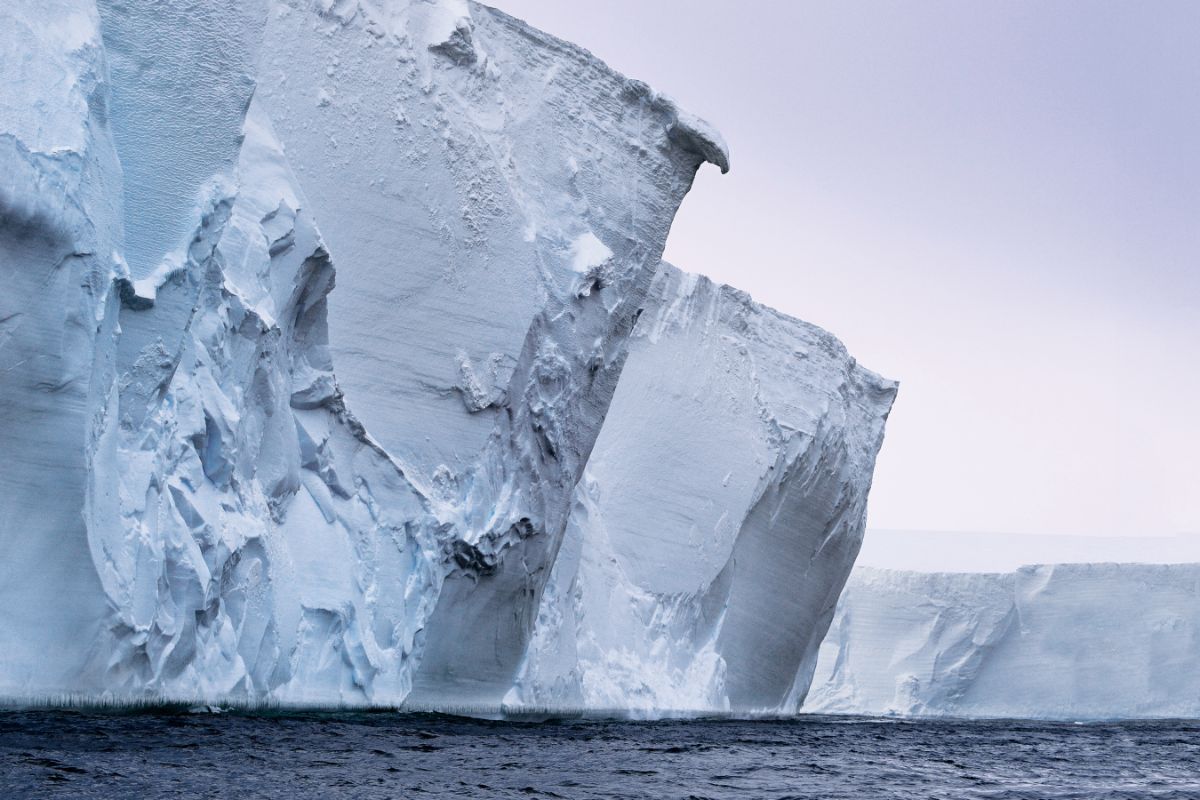
Why is the Doomsday Glacier so important? The Doomsday Glacier, also known as the Thwaites Glacier, is a massive ice formation in Antarctica. It's crucial because its melting could significantly raise global sea levels. This glacier alone holds enough ice to raise sea levels by over three meters if it melts completely. Scientists are closely monitoring it due to its rapid rate of melting, which has accelerated in recent years. Understanding the Doomsday Glacier helps us grasp the broader impacts of climate change. Its stability is vital for coastal communities worldwide. Keep reading to learn more about this critical glacier and its potential impact on our planet.
What is the Doomsday Glacier?
The Doomsday Glacier, also known as the Thwaites Glacier, is one of the most significant and closely monitored glaciers in Antarctica. Its potential impact on global sea levels makes it a critical subject of study for scientists worldwide. Here are some fascinating facts about this colossal ice mass.
-
The Thwaites Glacier is located in West Antarctica and flows into the Amundsen Sea.
-
It covers an area of approximately 192,000 square kilometers, roughly the size of Florida.
-
The glacier is named after Fredrik T. Thwaites, a prominent glaciologist.
-
Thwaites Glacier is one of the fastest-moving glaciers in Antarctica, with sections advancing up to 2 kilometers per year.
Why is it Called the Doomsday Glacier?
The nickname "Doomsday Glacier" hints at the potentially catastrophic consequences of its melting. Scientists are particularly concerned about its stability and the implications for global sea levels.
-
Thwaites Glacier holds enough ice to raise global sea levels by over 3 meters if it were to melt completely.
-
The glacier's melting could destabilize other nearby glaciers, leading to even more significant sea-level rise.
-
Thwaites Glacier is losing ice at an alarming rate, contributing about 4% to annual global sea-level rise.
-
The glacier's grounding line, where it meets the ocean floor, is retreating rapidly, accelerating ice loss.
The Science Behind the Glacier's Melting
Understanding why Thwaites Glacier is melting so quickly involves studying various factors, including ocean temperatures, ice dynamics, and climate change.
-
Warm ocean currents are eroding the glacier from below, causing it to melt faster.
-
Climate change is increasing air temperatures, which also contributes to the glacier's surface melting.
-
The glacier's ice shelf acts as a dam, holding back ice flow from the interior of Antarctica. As the ice shelf weakens, more ice flows into the ocean.
-
Satellite data shows that Thwaites Glacier has thinned by up to 800 meters in some areas over the past few decades.
The Impact on Global Sea Levels
The potential impact of Thwaites Glacier's melting on global sea levels is a major concern for coastal communities worldwide.
-
If Thwaites Glacier collapses, it could trigger a chain reaction, leading to the collapse of the entire West Antarctic Ice Sheet.
-
The collapse of the West Antarctic Ice Sheet could raise global sea levels by up to 3.3 meters.
-
Rising sea levels would inundate coastal cities, displacing millions of people and causing trillions of dollars in damage.
-
Low-lying island nations are particularly vulnerable to sea-level rise, facing the risk of becoming uninhabitable.
Efforts to Study and Monitor the Glacier
Scientists are using advanced technology and international collaboration to study and monitor Thwaites Glacier.
-
The International Thwaites Glacier Collaboration (ITGC) is a joint effort between the United States and the United Kingdom to study the glacier.
-
Researchers use satellite imagery, aerial surveys, and underwater robots to gather data on the glacier's behavior.
-
Ice-penetrating radar helps scientists map the glacier's internal structure and detect changes over time.
-
Autonomous underwater vehicles (AUVs) explore the ocean beneath the glacier, providing crucial data on water temperatures and currents.
The Future of Thwaites Glacier
Predicting the future of Thwaites Glacier involves complex modeling and understanding various factors influencing its stability.
-
Climate models suggest that Thwaites Glacier could reach a tipping point within the next few decades, leading to rapid and irreversible ice loss.
-
Reducing greenhouse gas emissions is crucial to slowing the glacier's melting and mitigating its impact on sea levels.
-
Scientists are exploring potential interventions, such as artificial barriers, to slow the glacier's retreat.
-
Public awareness and policy action are essential to address the challenges posed by Thwaites Glacier and climate change.
-
Continued research and international cooperation are vital to understanding and responding to the threats posed by the Doomsday Glacier.
The Doomsday Glacier's Future
The Doomsday Glacier holds a significant place in our understanding of climate change. Its rapid melting could lead to a dramatic rise in sea levels, affecting millions globally. Scientists are closely monitoring this glacier to predict future changes and develop strategies to mitigate potential impacts.
Understanding the glacier's behavior helps us prepare for the future. It's a stark reminder of the urgent need to address global warming. Small actions, like reducing carbon footprints, can collectively make a difference.
The Doomsday Glacier isn't just a chunk of ice; it's a warning sign. By staying informed and proactive, we can contribute to a more sustainable planet. Let's take this knowledge and use it to foster positive change. The future depends on our actions today.
Was this page helpful?
Our commitment to delivering trustworthy and engaging content is at the heart of what we do. Each fact on our site is contributed by real users like you, bringing a wealth of diverse insights and information. To ensure the highest standards of accuracy and reliability, our dedicated editors meticulously review each submission. This process guarantees that the facts we share are not only fascinating but also credible. Trust in our commitment to quality and authenticity as you explore and learn with us.