



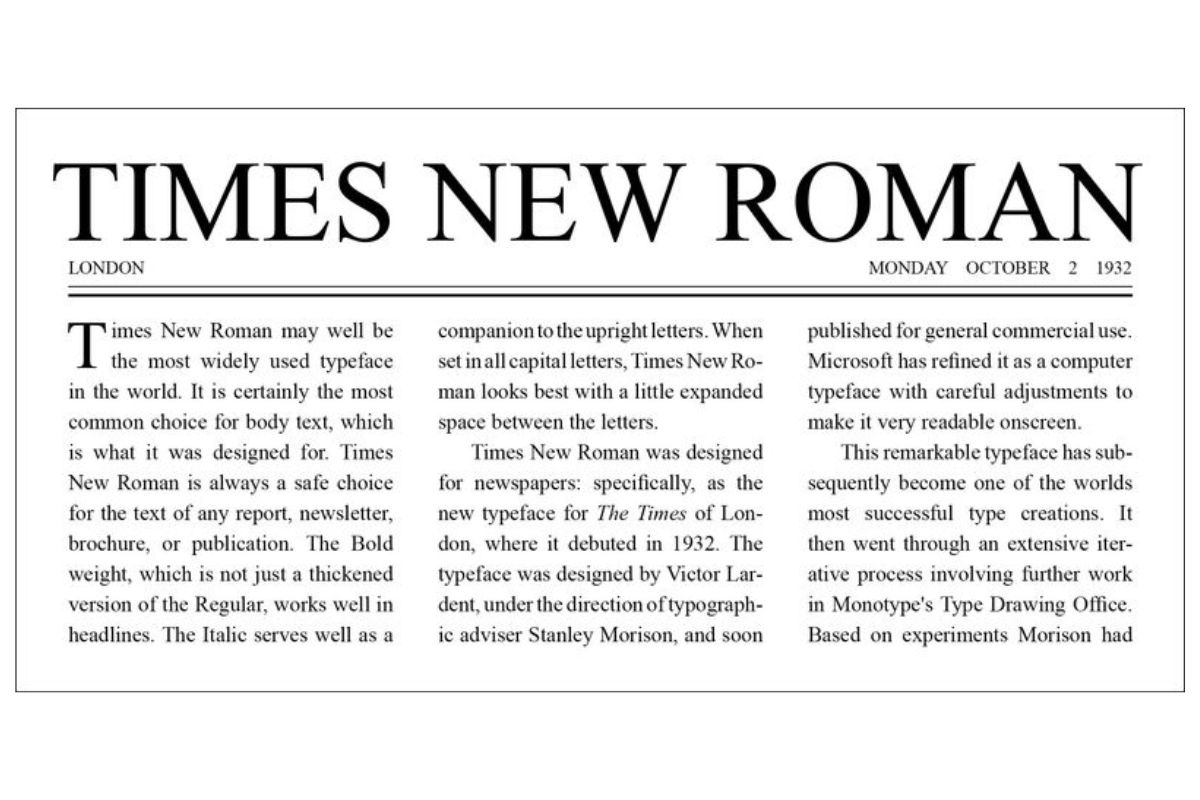
Why is Times New Roman so popular?
Times New Roman has become a staple in the world of typography. Created in 1931 for the British newspaper "The Times," it was designed to be highly legible and efficient in print. Its clean, professional appearance quickly made it a favorite for books, academic papers, and official documents. The typeface's popularity soared when it became the default font for Microsoft Word in the early 1990s. This widespread use cemented its status as a go-to choice for writers and designers alike. Times New Roman is known for its classic, timeless look, making it a versatile option for various applications.
The Origins of Times New Roman
Times New Roman is one of the most recognizable typefaces in the world. Its history is rich and fascinating, spanning nearly a century.
- Times New Roman was commissioned by the British newspaper "The Times" in 1931.
- Stanley Morison, a typographic advisor for Monotype, led the design project.
- Victor Lardent, an artist from "The Times," drew the letterforms under Morison's direction.
- The typeface was created to improve readability and conserve space in the newspaper.
- It debuted in "The Times" on October 3, 1932.
Design Characteristics
Times New Roman's design is both functional and aesthetically pleasing. Its features make it a versatile choice for various types of content.
- The typeface is a serif font, meaning it has small lines or strokes attached to the ends of its letters.
- It is known for its high readability, making it popular in print and digital media.
- The design includes short ascenders and descenders, allowing for tighter line spacing.
- Balanced proportions make it easy on the eyes, suitable for long texts.
- It has a slightly condensed appearance, which helps save space on the page.
Popularity and Usage
Times New Roman has become a staple in many different fields, from academia to business.
- It is the default font for many word processing programs, including Microsoft Word.
- Academic papers often require Times New Roman, especially in MLA and APA formats.
- Legal documents frequently use this typeface for its clarity and professionalism.
- Books and newspapers still use it for its readability and classic look.
- It is also popular in web design, despite the rise of other web-friendly fonts.
Variations and Adaptations
Over the years, Times New Roman has seen several adaptations and variations to meet modern needs.
- Times New Roman PS is a PostScript version used in desktop publishing.
- Times New Roman MT is the Monotype version, often found in Microsoft products.
- Times New Roman TT is the TrueType version, compatible with both Mac and Windows.
- Times New Roman WGL includes additional characters for multiple languages.
- Times New Roman Special G1 was designed for mathematical and scientific texts.
Fun Facts
Beyond its technical aspects, Times New Roman has some interesting trivia associated with it.
- The typeface was originally called "Times New Roman" to distinguish it from the older "Times Old Roman."
- It has been used in space; NASA used it for documentation during the Apollo missions.
- Steve Jobs admired the typeface and included it in early Apple products.
- It has appeared in movies and TV shows, often used in subtitles and credits.
- Despite its age, Times New Roman remains one of the most downloaded fonts on the internet.
Times New Roman's enduring popularity and versatility make it a timeless choice for a wide range of applications. Its rich history and design excellence continue to influence typography today.
The Timeless Charm of Times New Roman
Times New Roman isn't just a font; it's a piece of history. From its creation in 1931 for The Times newspaper to its widespread use in academia and business, this typeface has stood the test of time. Its clean, readable design makes it a favorite for documents, books, and even digital screens. Despite the rise of countless new fonts, Times New Roman remains a go-to choice for many. Its versatility and classic look ensure it will continue to be a staple in typography for years to come. Whether you're writing a school paper, drafting a business report, or designing a website, Times New Roman offers a reliable and professional appearance. So next time you choose a font, remember the rich history and enduring appeal of Times New Roman. It’s more than just letters on a page; it’s a legacy.
Was this page helpful?
Our commitment to delivering trustworthy and engaging content is at the heart of what we do. Each fact on our site is contributed by real users like you, bringing a wealth of diverse insights and information. To ensure the highest standards of accuracy and reliability, our dedicated editors meticulously review each submission. This process guarantees that the facts we share are not only fascinating but also credible. Trust in our commitment to quality and authenticity as you explore and learn with us.