



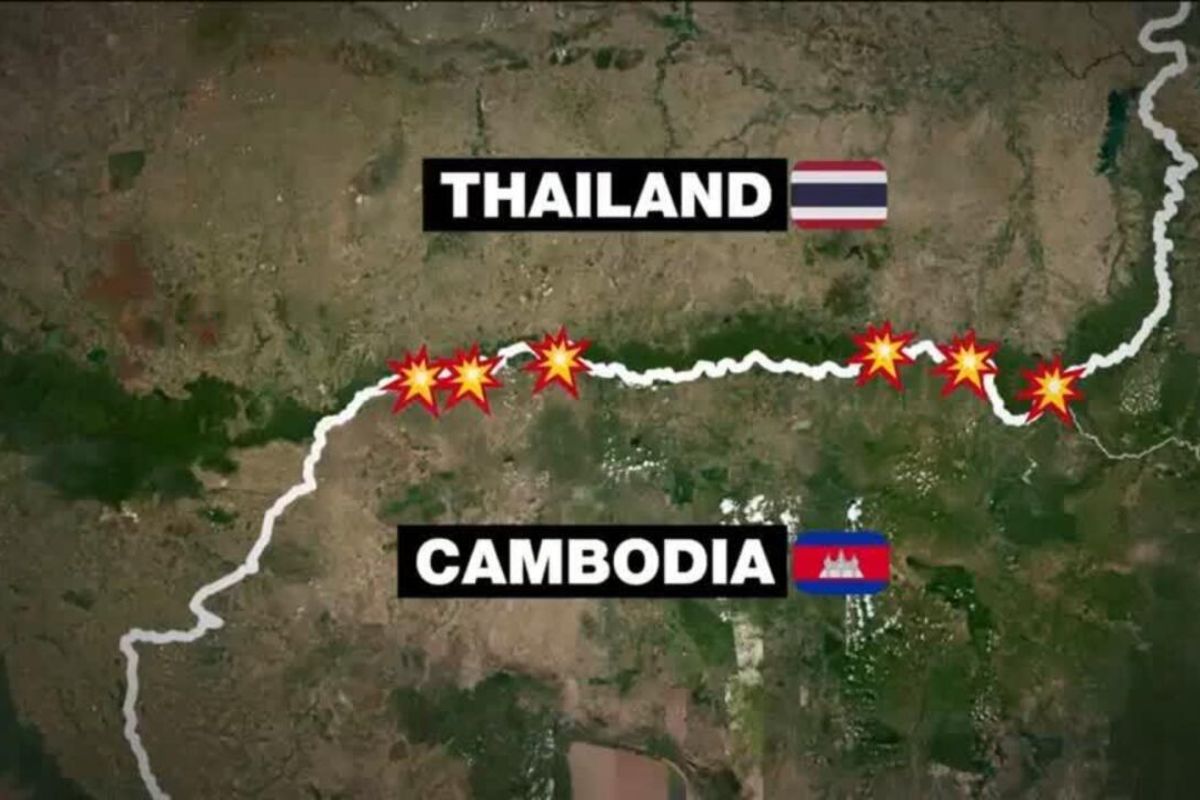
Why is the Thailand-Cambodia border dispute significant? This conflict isn't just about lines on a map; it affects real lives, history, and regional stability. The dispute centers around the Preah Vihear Temple, a UNESCO World Heritage site, which both nations claim. Tensions have led to military clashes, displacing communities and straining diplomatic relations. Understanding this issue helps grasp the complexities of Southeast Asian geopolitics. From ancient claims to modern-day skirmishes, the Thailand-Cambodia border dispute is a vivid example of how historical grievances can shape current events. Dive into these 25 facts to get a clearer picture of this ongoing conflict.
Historical Background
Understanding the Thailand-Cambodia border dispute requires a look at its historical roots. This conflict has deep-seated origins that have shaped the current situation.
- The dispute dates back to the early 20th century when French colonial powers drew the borders between Thailand (then Siam) and Cambodia.
- The Preah Vihear Temple, a key point of contention, was awarded to Cambodia by the International Court of Justice (ICJ) in 1962.
- Despite the ICJ ruling, Thailand has maintained claims over the surrounding land, leading to ongoing tensions.
Key Locations
Several specific locations are central to the dispute, each with its own significance.
- Preah Vihear Temple is an ancient Hindu temple situated atop a 525-meter cliff in the Dângrêk Mountains.
- Ta Moan and Ta Krabey temples, located near the border, have also been points of military skirmishes.
- The Dangrek Mountain range forms a natural boundary between the two countries, complicating border demarcation.
Political Implications
The border dispute has significant political ramifications for both nations.
- Nationalist sentiments in both countries often flare up, influencing domestic politics.
- Political parties in Thailand and Cambodia sometimes use the dispute to rally support and distract from internal issues.
- ASEAN, the regional political and economic organization, has attempted to mediate the conflict with limited success.
Military Clashes
Military confrontations have occurred sporadically, affecting both soldiers and civilians.
- In 2008, a series of armed clashes erupted, resulting in casualties on both sides.
- The conflict saw a significant escalation in 2011, with artillery exchanges and troop deployments.
- Both countries have fortified their positions along the disputed border, leading to a militarized zone.
International Involvement
Global entities have played roles in attempting to resolve the dispute.
- The United Nations Security Council has called for ceasefires and peaceful negotiations.
- UNESCO's designation of Preah Vihear as a World Heritage Site in 2008 added another layer of complexity.
- The ICJ has been involved multiple times, most recently in 2013, reaffirming Cambodia's sovereignty over the temple.
Economic Impact
The ongoing dispute has economic consequences for both nations.
- Border trade between Thailand and Cambodia has been disrupted during periods of heightened tension.
- Tourism, particularly to the Preah Vihear Temple, has been affected by safety concerns.
- Both countries have incurred significant military expenditures due to the conflict.
Cultural Significance
The dispute is not just political but also cultural, affecting the identities of both nations.
- Preah Vihear Temple is a symbol of national pride for Cambodians.
- Thais view the surrounding land as historically and culturally significant.
- Both nations have used historical narratives to justify their claims, deepening the cultural divide.
Recent Developments
Recent years have seen both progress and setbacks in resolving the dispute.
- In 2011, both countries agreed to withdraw troops from a demilitarized zone around Preah Vihear.
- Bilateral talks have been held intermittently, with varying degrees of success.
- The COVID-19 pandemic temporarily reduced tensions as both countries focused on internal challenges.
- As of 2023, the dispute remains unresolved, but diplomatic efforts continue in hopes of a lasting solution.
The Ongoing Saga
The Thailand-Cambodia border dispute is a complex issue with deep historical roots. Both nations have strong cultural and historical ties to the contested areas, making resolution challenging. Despite various attempts at negotiation and intervention by international bodies, tensions remain high. Understanding the background and key events can help in grasping the current situation.
This dispute isn't just about land; it's about national pride, historical claims, and regional stability. As both countries continue to navigate this sensitive issue, the hope is for a peaceful resolution that respects the heritage and aspirations of both peoples. Keeping informed about such disputes is crucial for anyone interested in Southeast Asian geopolitics.
Stay tuned for updates, as this story is far from over. The resolution of this dispute will shape the future of Thailand and Cambodia, impacting the broader region as well.
Was this page helpful?
Our commitment to delivering trustworthy and engaging content is at the heart of what we do. Each fact on our site is contributed by real users like you, bringing a wealth of diverse insights and information. To ensure the highest standards of accuracy and reliability, our dedicated editors meticulously review each submission. This process guarantees that the facts we share are not only fascinating but also credible. Trust in our commitment to quality and authenticity as you explore and learn with us.