



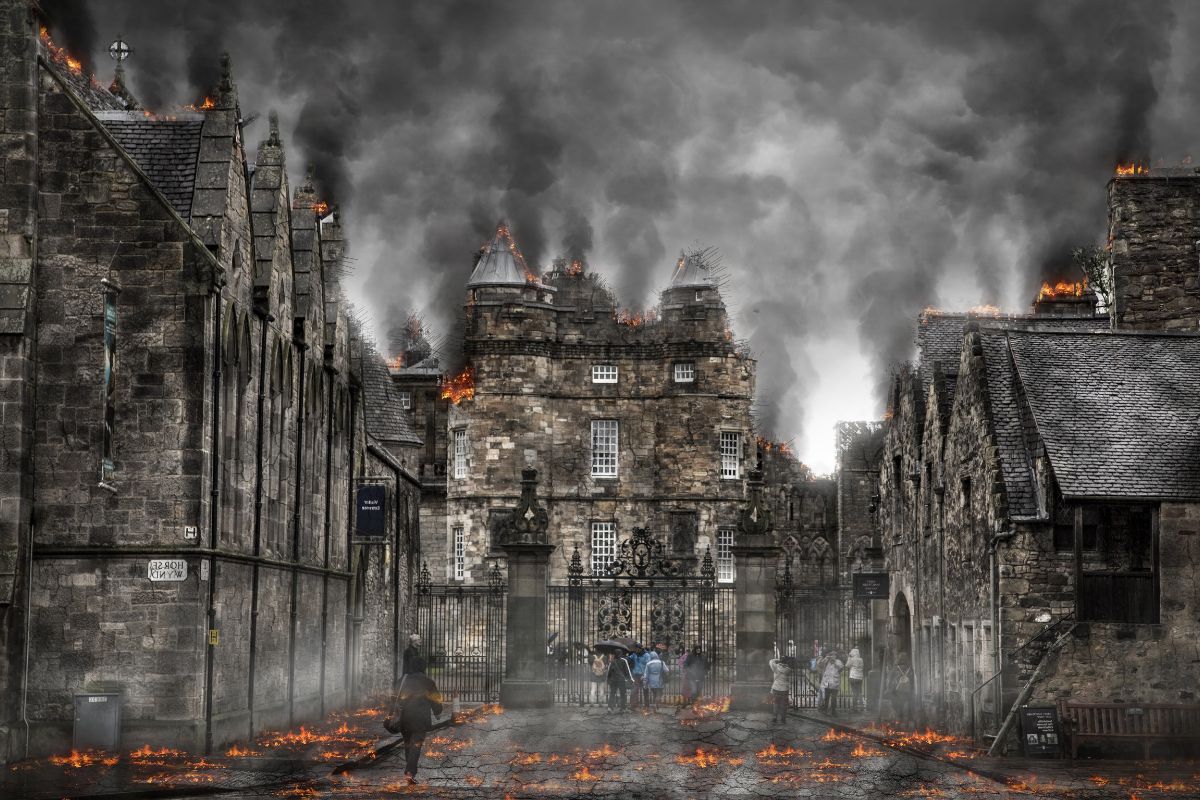
What is the origin of the word "war"? The term "war" has roots in the Old English word "werre," which itself comes from the Old High German word "werra," meaning "confusion" or "strife." This word evolved over centuries, reflecting the chaotic and destructive nature of armed conflict. Wars have shaped human history, influenced cultures, and driven technological advancements. From ancient battles to modern warfare, the concept of war has remained a constant, albeit grim, part of our world. Understanding its origins helps us grasp the profound impact it has had on societies throughout time.
25 Facts about War
Wars have shaped human history in profound ways. From ancient battles to modern conflicts, the impact of war is undeniable. Here are some fascinating facts about war that might surprise you.
Ancient Wars
Ancient wars were often fought with swords, shields, and strategies that seem primitive by today's standards. Yet, they were no less brutal or significant.
-
The Trojan War is one of the most famous ancient conflicts, believed to have taken place around the 12th century BCE. It inspired Homer's epic poems, "The Iliad" and "The Odyssey."
-
The Battle of Thermopylae in 480 BCE saw 300 Spartans, led by King Leonidas, hold off a much larger Persian army for three days. This battle is celebrated for its display of courage and strategy.
-
The Peloponnesian War (431-404 BCE) was a protracted conflict between Athens and Sparta, two of ancient Greece's most powerful city-states. It ultimately led to the downfall of Athens.
-
Alexander the Great never lost a battle in his 15-year campaign to create one of the largest empires in history, stretching from Greece to Egypt and into northwest India.
Medieval Wars
The medieval period saw the rise of knights, castles, and epic battles that shaped the course of European history.
-
The Battle of Hastings in 1066 was a pivotal moment in English history. William the Conqueror's victory led to the Norman conquest of England.
-
The Crusades were a series of religious wars between Christians and Muslims, primarily to secure control of holy sites in the Middle East. They spanned from 1096 to 1291.
-
The Hundred Years' War (1337-1453) was a series of conflicts between England and France. It saw the rise of notable figures like Joan of Arc, who played a crucial role in lifting the siege of Orléans.
-
The War of the Roses (1455-1487) was a series of English civil wars for control of the throne, fought between the houses of Lancaster and York. It ended with the rise of the Tudor dynasty.
Modern Wars
Modern warfare has been defined by technological advancements and global conflicts that have reshaped nations and societies.
-
World War I (1914-1918) introduced trench warfare and saw the first use of tanks and chemical weapons. It resulted in the deaths of over 16 million people.
-
World War II (1939-1945) was the deadliest conflict in human history, with an estimated 70-85 million fatalities. It included the Holocaust, where six million Jews were systematically murdered.
-
The Vietnam War (1955-1975) was a prolonged conflict that pitted communist North Vietnam against South Vietnam and its principal ally, the United States. It profoundly affected American society and politics.
-
The Cold War (1947-1991) was a period of geopolitical tension between the Soviet Union and the United States. It never escalated into direct conflict but involved numerous proxy wars, espionage, and the threat of nuclear war.
Technological Advancements in War
War has often driven technological innovation, leading to advancements that have had both military and civilian applications.
-
The machine gun was a game-changer in warfare, first used extensively during World War I. It could fire hundreds of rounds per minute, making traditional charges nearly suicidal.
-
Radar technology, developed during World War II, allowed for the detection of enemy aircraft and ships, significantly altering the course of the war.
-
The atomic bomb was developed during the Manhattan Project and first used in 1945 on the Japanese cities of Hiroshima and Nagasaki, leading to Japan's surrender in World War II.
-
The internet has its roots in military research. ARPANET, the precursor to the modern internet, was developed by the U.S. Department of Defense in the 1960s.
Psychological Impact of War
The psychological toll of war on soldiers and civilians is immense, often leading to long-term mental health issues.
-
Post-Traumatic Stress Disorder (PTSD) was first recognized in soldiers returning from World War I, then known as "shell shock." It affects many veterans and civilians exposed to traumatic events.
-
The Hiroshima and Nagasaki bombings not only caused immediate devastation but also led to long-term health issues, including cancer and psychological trauma for survivors.
-
Child soldiers are used in conflicts around the world, particularly in Africa. These children often suffer severe psychological damage and struggle to reintegrate into society.
-
The Rwandan Genocide in 1994 resulted in the deaths of an estimated 800,000 people in just 100 days. The survivors, many of whom witnessed horrific violence, continue to suffer from deep psychological scars.
Economic Impact of War
Wars have significant economic consequences, often leading to both destruction and innovation.
-
World War II spurred economic growth in the United States, pulling it out of the Great Depression. The war effort led to advancements in technology and industry.
-
The Marshall Plan was an American initiative to aid Western Europe after World War II. It provided over $12 billion to help rebuild economies and prevent the spread of communism.
-
The Iraq War (2003-2011) cost the United States over $2 trillion. The conflict had a profound impact on the global economy, particularly in terms of oil prices.
-
Reconstruction efforts after wars can take decades and require significant financial investment. For example, rebuilding Europe after World War II involved extensive international cooperation and funding.
-
War profiteering occurs when individuals or companies profit from warfare by selling weapons, supplies, or services. This practice has been criticized for prioritizing profit over human lives.
The Final Countdown
Wars have shaped our world in ways both big and small. From the ancient battles of Greece and Rome to the modern conflicts of the 20th century, each war has left its mark on history. Understanding these facts helps us appreciate the complexities of human conflict and the lessons learned. Wars have driven technological advances, changed political landscapes, and impacted countless lives. By learning about these events, we gain a deeper understanding of our past and can better navigate our future. Remember, history isn't just about dates and names; it's about the stories and experiences that define us. So, keep exploring, keep questioning, and keep learning. The more we know, the better equipped we are to build a peaceful world.
Was this page helpful?
Our commitment to delivering trustworthy and engaging content is at the heart of what we do. Each fact on our site is contributed by real users like you, bringing a wealth of diverse insights and information. To ensure the highest standards of accuracy and reliability, our dedicated editors meticulously review each submission. This process guarantees that the facts we share are not only fascinating but also credible. Trust in our commitment to quality and authenticity as you explore and learn with us.