



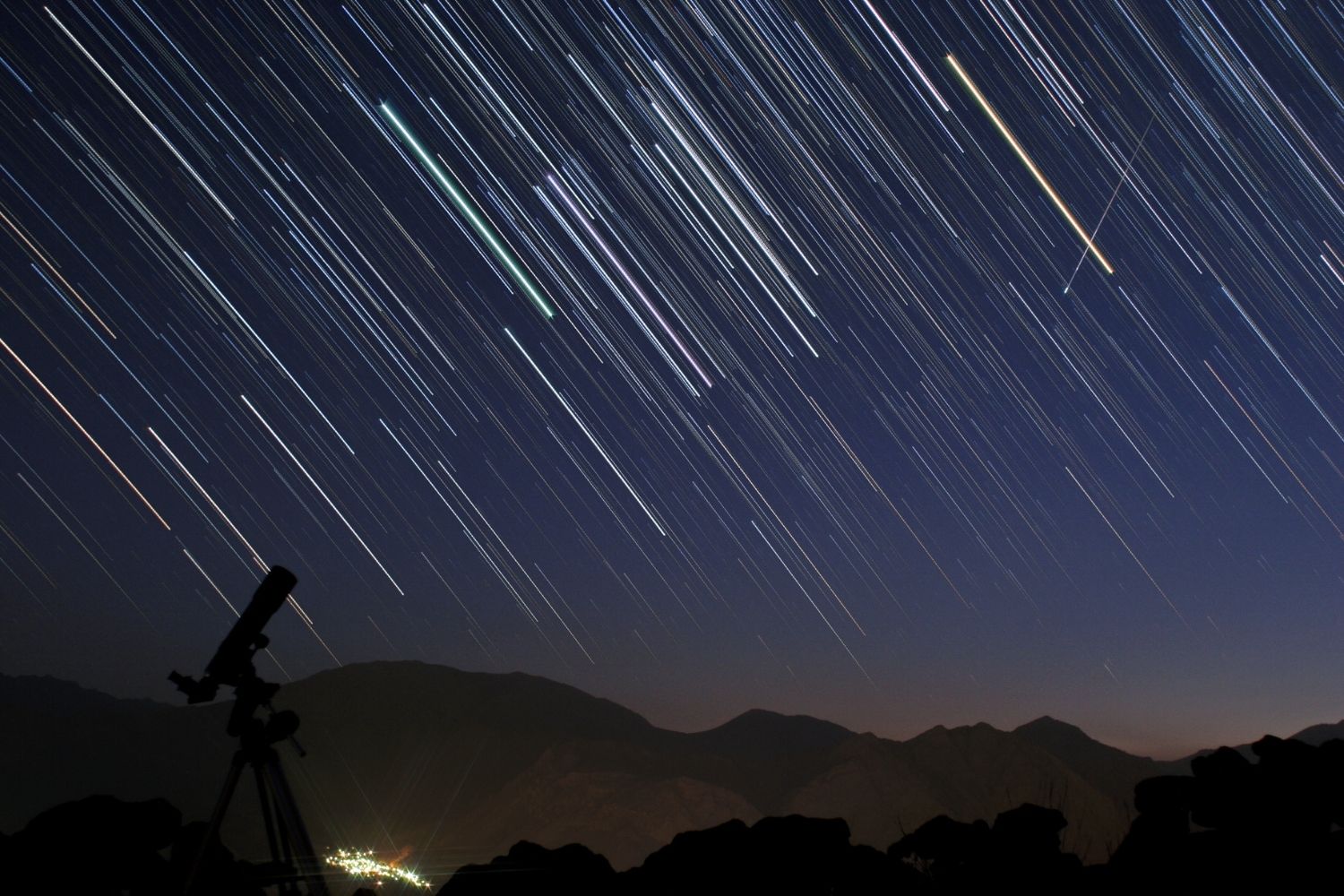
What are comet showers? Comet showers, also known as meteor showers, occur when Earth passes through the trail of debris left by a comet. These spectacular events light up the night sky with streaks of light as tiny particles burn up in our atmosphere. Why do comet showers happen? As comets travel through space, they shed dust and rocks. When Earth intersects this path, the debris enters our atmosphere, creating a dazzling display. When can you see them? Some of the most famous comet showers, like the Perseids and Leonids, happen annually and can be predicted with great accuracy. How do they differ from regular meteors? Regular meteors are random, while comet showers are predictable and often more intense. Ready to learn more? Let's dive into 25 fascinating facts about these celestial fireworks!
What Are Comet Showers?
Comet showers, also known as meteor showers, occur when Earth passes through the debris left by a comet. These events can be spectacular, lighting up the night sky with streaks of light. Here are some fascinating facts about comet showers.
-
Comet showers are named after the constellation from which they appear to originate. For example, the Perseids seem to come from the constellation Perseus.
-
The debris causing comet showers is usually no larger than a grain of sand. Despite their small size, these particles burn brightly when they enter Earth's atmosphere.
-
Comet showers can be predicted. Scientists know the orbits of many comets and can predict when Earth will pass through their debris fields.
Famous Comet Showers
Certain comet showers are more famous and eagerly anticipated than others. These showers have been observed for centuries and have fascinating histories.
-
The Perseid meteor shower is one of the most famous. It occurs every August and is known for its bright meteors.
-
The Leonid meteor shower is known for its meteor storms. These storms can produce thousands of meteors per hour and occur roughly every 33 years.
-
The Geminid meteor shower is unique because it comes from an asteroid, not a comet. This shower occurs every December and is known for its bright, multicolored meteors.
The Science Behind Comet Showers
Understanding the science behind comet showers can make watching them even more exciting. Here are some scientific facts that explain how these events occur.
-
Comets are made of ice, dust, and rocky material. As they approach the Sun, they heat up and release gas and dust, forming a glowing coma and tail.
-
The debris trail left by a comet is called a meteoroid stream. When Earth passes through this stream, the particles enter our atmosphere and create meteors.
-
The speed of meteors can reach up to 160,000 miles per hour. This incredible speed causes the particles to burn up and create bright streaks of light.
Observing Comet Showers
Watching a comet shower can be a magical experience. Here are some tips and facts to help you get the most out of your meteor-watching experience.
-
The best time to watch a comet shower is after midnight. This is when Earth is facing the direction of the oncoming meteoroid stream.
-
You don't need a telescope to see a comet shower. In fact, telescopes can limit your field of view. It's best to use your naked eyes.
-
Find a dark location away from city lights. Light pollution can make it difficult to see meteors.
Historical Significance of Comet Showers
Comet showers have been observed and recorded throughout history. They have often been seen as omens or signs from the heavens.
-
The Chinese have recorded comet showers for over 2,000 years. Ancient Chinese astronomers meticulously documented these events.
-
The Leonid meteor storm of 1833 was so intense it sparked a religious revival in the United States. People thought it was the end of the world.
-
The Perseid meteor shower has been observed for at least 2,000 years. The earliest known records come from Chinese annals.
Fun Facts About Comet Showers
Here are some fun and lesser-known facts about comet showers that might surprise you.
-
Some meteor showers are associated with specific comets. For example, the Perseids are linked to Comet Swift-Tuttle.
-
Meteor showers can produce fireballs. These are exceptionally bright meteors that can light up the entire sky.
-
The word "meteor" comes from the Greek word "meteoron," meaning "phenomenon in the sky."
Modern Research and Discoveries
Scientists continue to study comet showers to learn more about our solar system. Here are some recent discoveries and ongoing research efforts.
-
NASA's Meteoroid Environment Office monitors meteor showers. They provide real-time data and predictions.
-
The European Space Agency's Rosetta mission studied Comet 67P/Churyumov-Gerasimenko. This mission provided valuable insights into comet composition and behavior.
-
Amateur astronomers play a crucial role in observing and reporting meteor showers. Their observations help scientists refine their predictions.
The Future of Comet Showers
What does the future hold for comet showers? Here are some predictions and upcoming events to look forward to.
-
The next major Leonid meteor storm is expected in 2034. This event could produce thousands of meteors per hour.
-
New comets are discovered regularly. Each new comet has the potential to create a new meteor shower.
-
Advances in technology will improve our ability to predict and observe meteor showers. This will make it easier for everyone to enjoy these celestial events.
-
Comet showers will continue to captivate and inspire people for generations to come. They remind us of the beauty and mystery of the universe.
The Magic of Comet Showers
Comet showers are more than just a pretty sight in the night sky. They offer a glimpse into the mysteries of our universe. From the Perseids to the Leonids, each shower has its own story, adding to the rich tapestry of our cosmic neighborhood. These events remind us of the vastness of space and our place within it. Watching a comet shower can be a humbling, awe-inspiring experience, connecting us to the ancient past and the infinite future. So next time you hear about a comet shower, grab a blanket, find a dark spot, and look up. You might just catch a glimpse of something truly spectacular. Keep your eyes on the skies, and let the wonders of the universe unfold before you.
Was this page helpful?
Our commitment to delivering trustworthy and engaging content is at the heart of what we do. Each fact on our site is contributed by real users like you, bringing a wealth of diverse insights and information. To ensure the highest standards of accuracy and reliability, our dedicated editors meticulously review each submission. This process guarantees that the facts we share are not only fascinating but also credible. Trust in our commitment to quality and authenticity as you explore and learn with us.